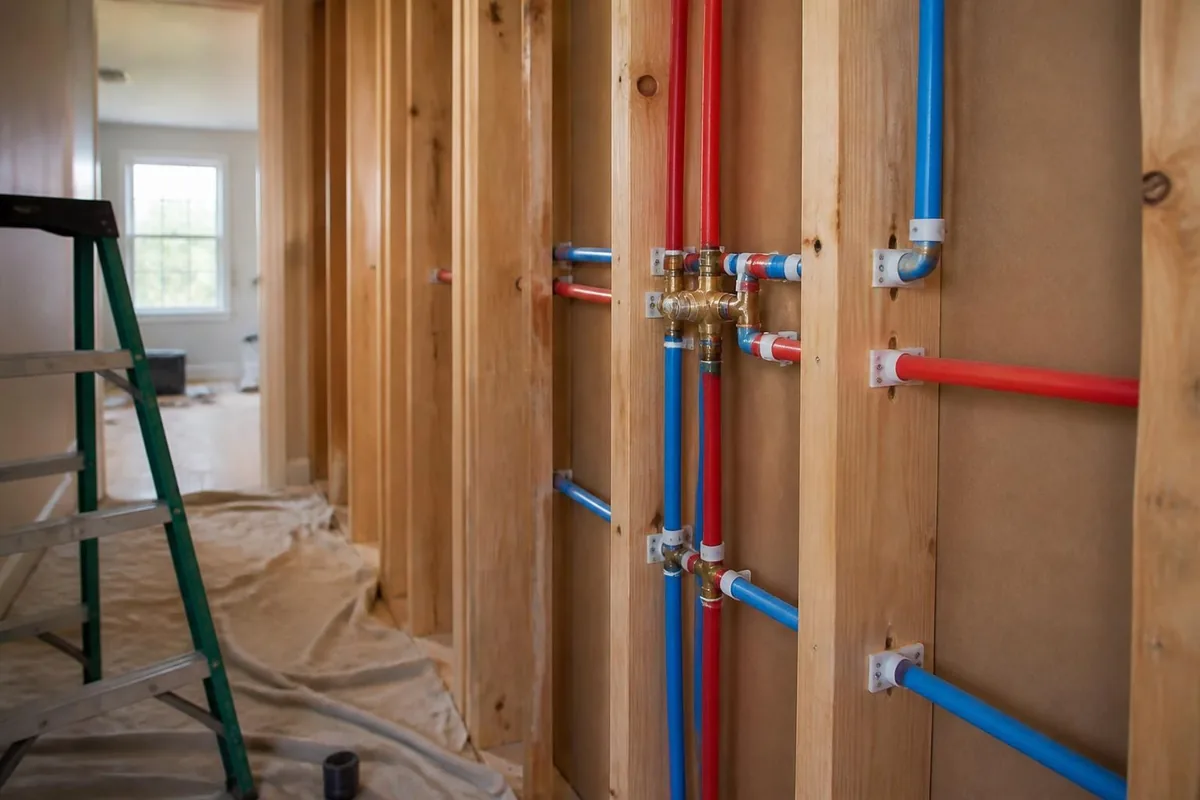
In Sandy Springs, repiping mostly comes up in the houses built before the 1990s, where copper has started to pinhole or polybutylene and galvanized lines are still in service. A plumber replaces the supply pipe in one planned job or in stages, usually with PEX or copper. Call the number on this page to be connected with a local plumber in Sandy Springs.
Symptoms worth taking seriously
- Threaded gray steel pipe with rust flaking off around the fittings
- Aerators and showerheads clog with grit or rust flakes soon after cleaning
- Several taps lose pressure together, especially upstairs
- A plumber has already patched the same run more than once
- PB-stamped gray plastic shows up under a sink or near the heater
- Hot water arrives slowly and weakly even with a working heater
- Repair clamps and patch couplings are already scattered along the exposed lines
- Gray plastic supply pipe, often stamped PB2110, feeds the water heater or the sinks
The Sandy Springs picture
The median Sandy Springs home dates to 1989, and roughly 29% of housing went up before 1980, with the 1970s the biggest older decade at about 15%, according to Census survey figures. Established neighborhoods like Riverside and Huntcliff hold much of that older stock, while the towers and newer townhomes around Perimeter Center and City Springs rarely need a full repipe.
Water reaches Sandy Springs from the City of Atlanta's Department of Watershed Management, while Fulton County handles sewer, so a supply problem and a drain problem go to two different agencies. Atlanta's rule is that the city owns the line from the main to the meter and the owner owns everything past it. Sandy Springs requires a plumbing permit for nearly all plumbing projects, with rough and final inspections.
What drives the price
- Patching after the work: some quotes include drywall patching and others stop at rough repair, so ask.
- Extras done at the same visit: it often makes sense to add fresh shutoffs, hose bibs or a pressure regulator while walls are open.
- Number of stories: upstairs bathrooms mean longer vertical runs and more places to open walls.
- Distance from the meter: houses set far back from the street need a longer service run.
- Pipe material: PEX usually takes fewer labor hours than soldered copper, and CPVC sits somewhere between.
- Access obstacles: cramped crawl spaces, attic insulation and built-ins all lengthen the job.
- Permits and inspections: rough-in and final inspections set the pace of the job.
After you dial
The call links you with a local plumber who takes work in Sandy Springs; this site is a referral line, not a plumbing company. Describe the problem in plain terms: repeat leaks, rusty water, weak pressure or gray plastic pipe. A visit comes next so the plumber can trace the runs, check the shutoffs and judge whether a section repair or a full repipe makes more sense. Paperwork with the City of Sandy Springs is normally part of the plumber's job.
Repiping questions in Sandy Springs
How can I tell what kind of supply pipe my house has?
Does a repipe need a permit, and who issues it?
Does the utility's service line inventory cover the pipes inside my home?
How does a slab foundation change a repipe?
More plumbing services in Sandy Springs
Repiping nearby
Sources
Last updated: