Norcross mixes an 1870 railroad downtown with 1980s and 1990s neighborhoods, so a repipe here may replace galvanized steel in an older house or polybutylene in a newer one. A plumber replaces pipe from the Gwinnett meter to each fixture. Call the number on this page to be connected with a local plumber in Norcross.
Norcross at a glance
The median Norcross home dates to 1990, and about 18% predate 1980, under Census survey data. The oldest houses sit near the historic downtown square, while much of the rest is 1980s and 1990s housing where polybutylene and aging copper are the materials to check.
Gwinnett County took over the Norcross water and sewer system in 2013 and replaced city meters with county ones. Gwinnett keeps the meter and the pipe to it; the private service line on your side is yours. Norcross requires a permit for plumbing fixture work that alters piping.
What to do now
- Run a quick meter check: turn off every fixture and see whether the meter still moves.
- Check your service line on Gwinnett's lookup at GwinnettCounty.com/ServiceLines.
- Note the pipe material at the water heater: copper, gray steel, gray plastic, cream plastic or colored tubing.
- List the fixtures in the house, including outdoor spigots and the ice maker line.
What you notice and what it usually means
| Symptom | Likely cause |
|---|---|
| Stains on a ceiling under a bathroom | Leak on a supply branch above |
| Water heater outlet pipe rusted through | Mixed metals corroding where they meet |
| Weak flow everywhere, worst upstairs | Galvanized pipe narrowed by internal buildup |
| Soggy patch between meter and house | Failing buried service line |
| Gray plastic pipe or fittings that crack | Polybutylene nearing the end of its life |
| Grit in aerators again and again | Scale and rust breaking loose inside old pipe |
| Tiny wet spots on copper, often hot side | Pinhole corrosion in aging copper |
| Rusty or brown water from several taps | Corroding galvanized steel inside the walls |
Cost factors to expect
- Permits and inspections: the permit office's required rough and final inspections are built into the schedule.
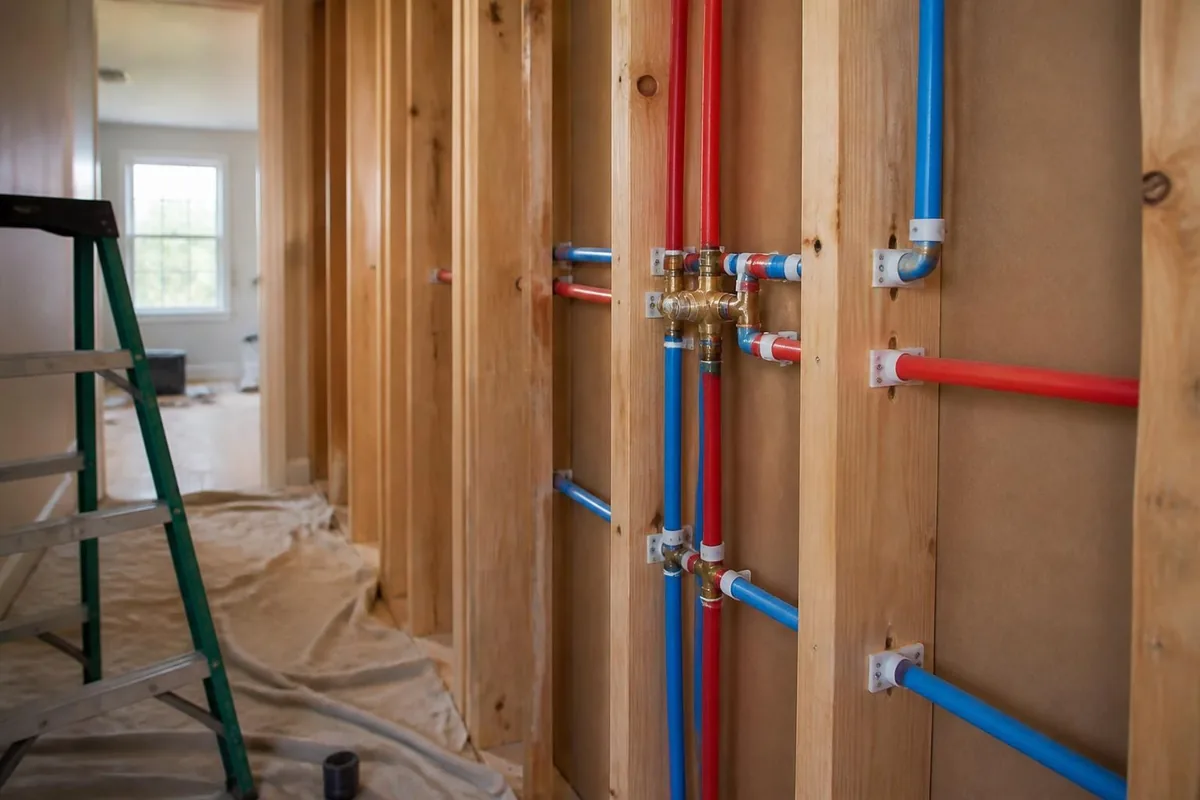
- Pipe material: copper costs more in labor because each joint is soldered, while PEX bends around corners with fewer fittings.
- Patching after the work: some quotes include drywall patching and others stop at rough repair, so ask.
- Access obstacles: built-in cabinets, finished ceilings or a tight crawl space slow the routing.
- Wall and ceiling finishes: plaster, tile backsplashes and finished basement ceilings take more care to open and close.
- Extras done at the same visit: new shutoff valves, a pressure-reducing valve or water heater connections add parts and time.
- House size and fixture count: every bathroom, kitchen, laundry hookup and hose bib adds runs and fittings.
- Phased or all at once: doing one branch now and the rest later spreads cost but adds trips.
- Number of stories: upstairs bathrooms mean longer vertical runs and more places to open walls.
Repiping questions in Norcross
Does a repipe need a permit, and who issues it?
How can I tell what kind of supply pipe my house has?
Does the local water affect which pipe material to use?
Can a plumber replace only the worst sections instead of the whole house?
More plumbing services in Norcross
Repiping nearby
Helpful guides
Sources
Last updated: